
Concreters Pakenham

Call us · 03 4517 8067

Built for Cardinia’s Conditions

Concreting in Pakenham is two jobs pretending to be one. There’s the slab on your land — driveway, path, shed base — and there’s the vehicle crossing between your fence line and the kerb, which sits on Council land and is governed by the Road Management Act 2004. Different rules, different standards, different paperwork. Most quotes bundle them into one number and never mention the difference.

We work across Pakenham, Officer, Beaconsfield and the Cardinia corridor. This page explains how we build and what the councils out here actually require, so you can judge a quote — ours or anyone’s — on something other than the bottom line.

Services

concrete driveways pakenham


Concrete Driveways

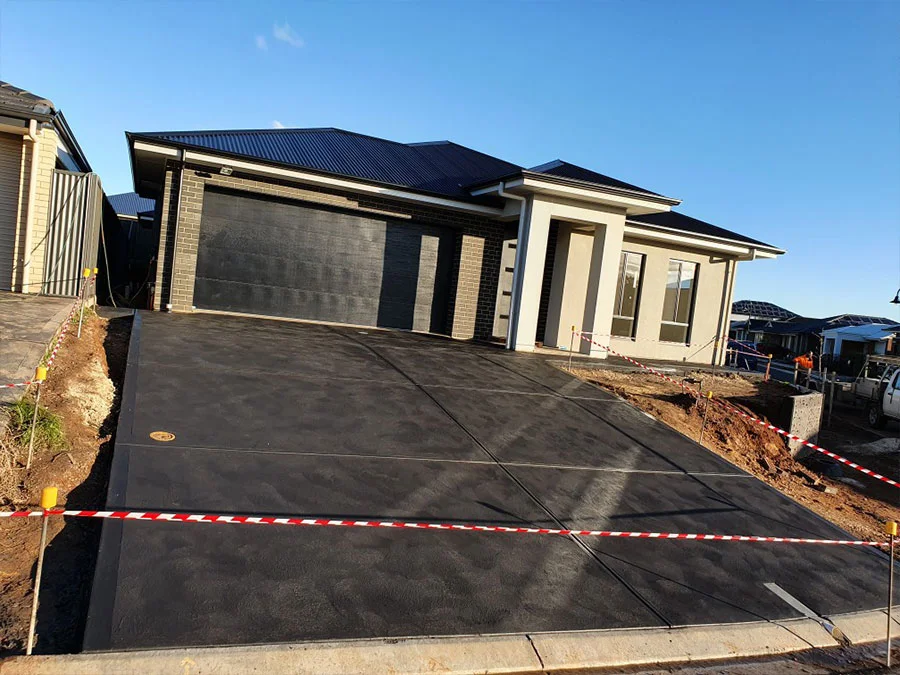
Reinforced driveways designed to the site classification on your soil report. Mesh on bar chairs with cover to all edges, not thrown on the subgrade. Compacted crushed rock base, saw-cut control joints, expansion joints isolating the slab from fixed structures.
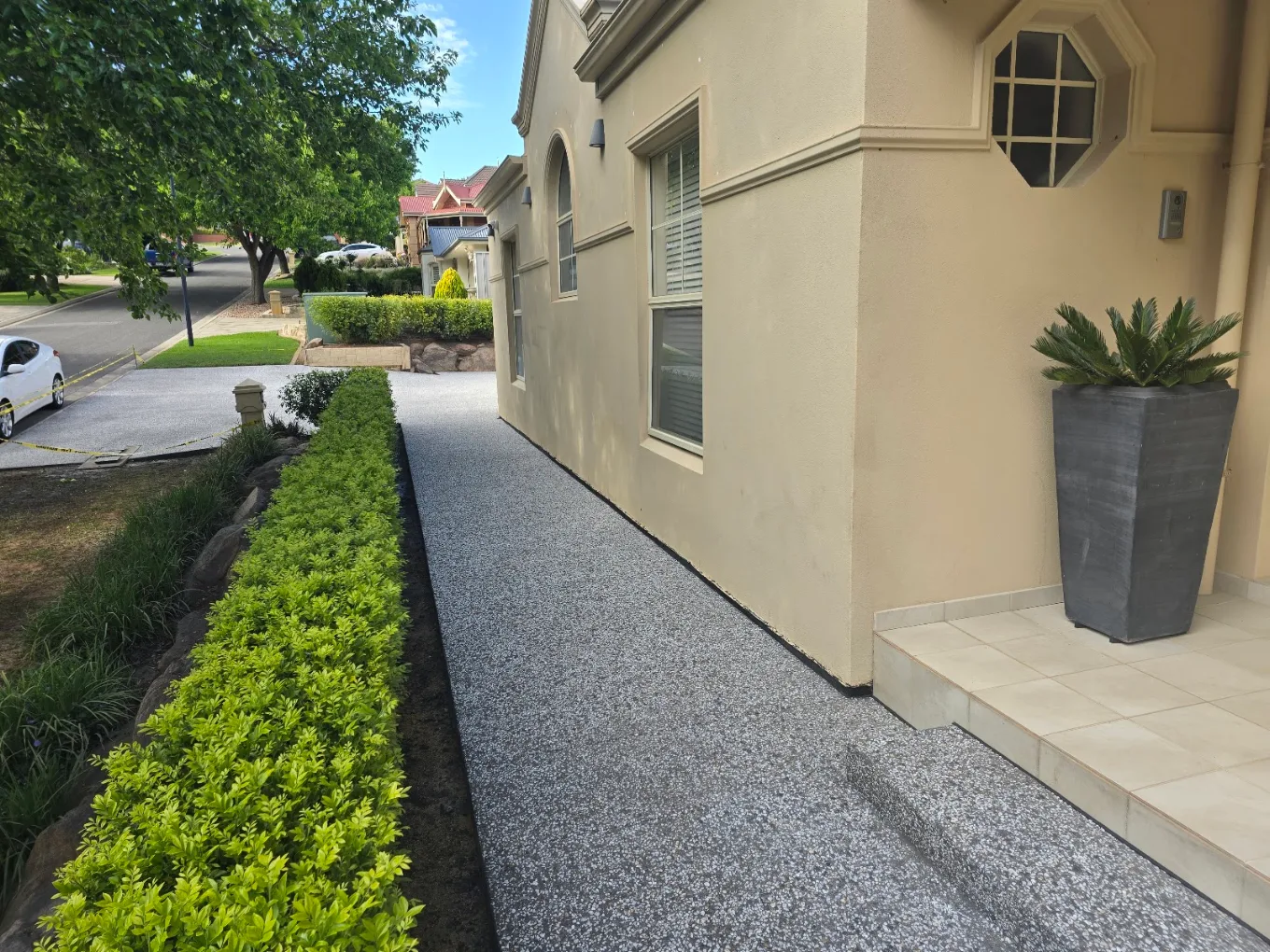
exposed aggregate job in pakenham


Exposed Aggregate

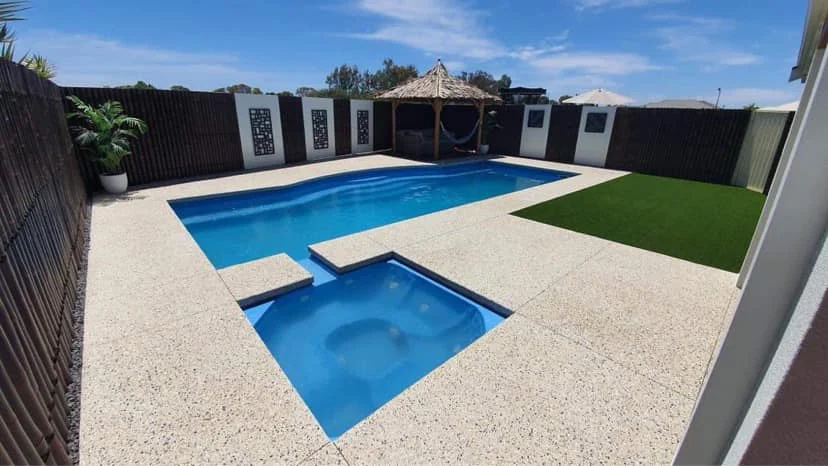
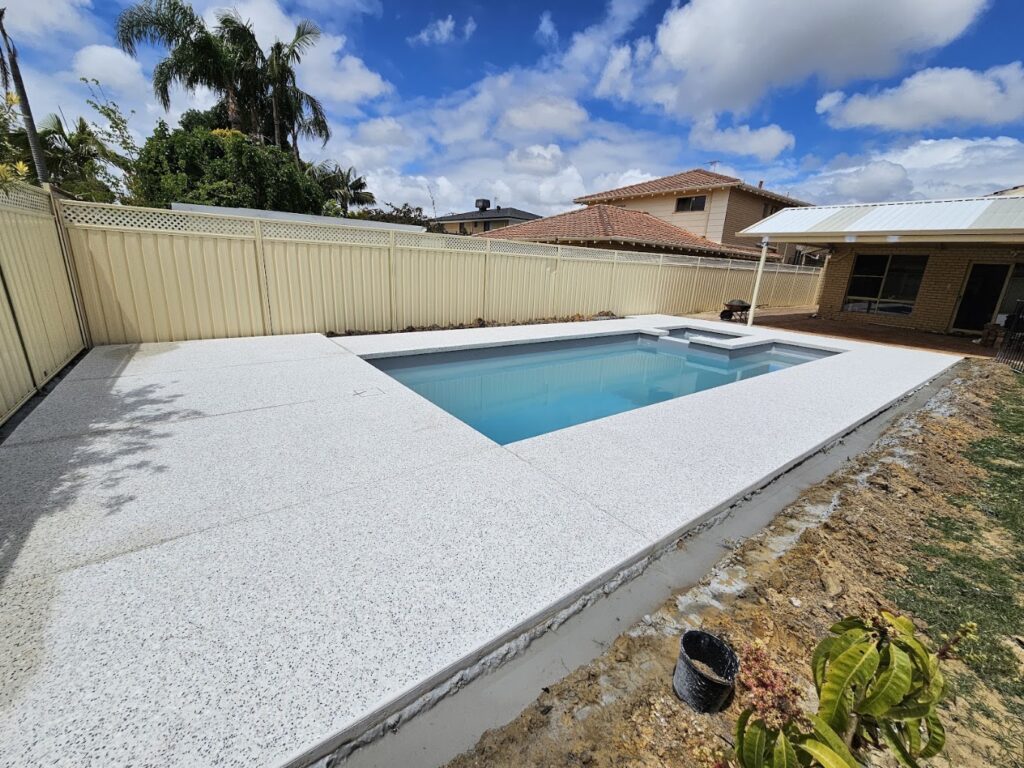
Washed and retarded aggregate finishes. Slip resistance classified to AS 4586, which matters on a sloping driveway more than it does on a flat one.
concrete slabs in pakenham


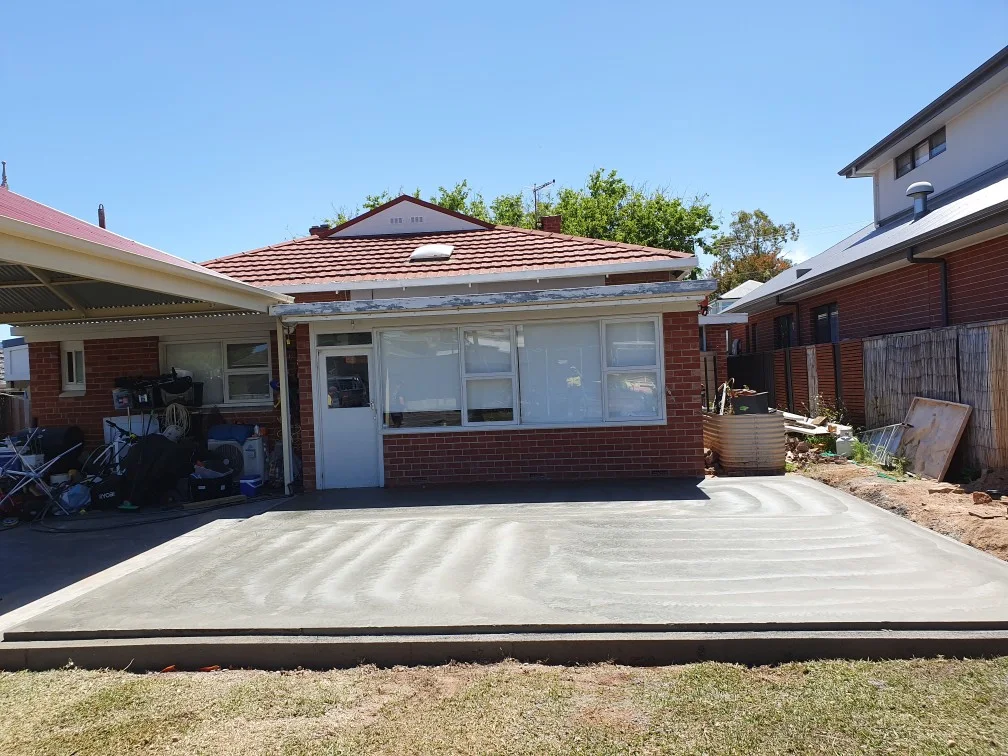
Concrete Slabs

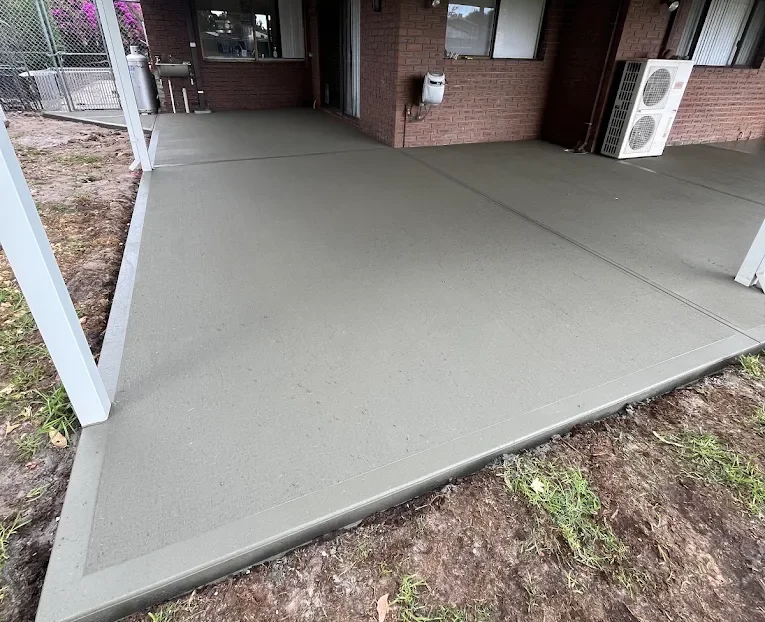
Shed slabs, garage slabs, alfresco and outbuilding bases. Thickened edges and reinforcement to suit the load and the site class.
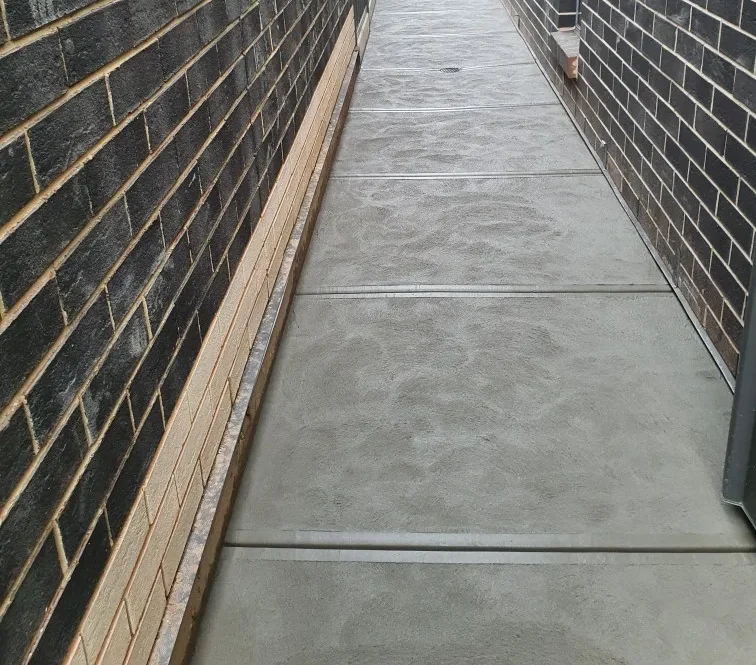
concrete pathways in pakenham


Concrete Paths

Paths, crossfalls and pours around the house. Falls set away from the building so water leaves the slab instead of sitting against the footing.
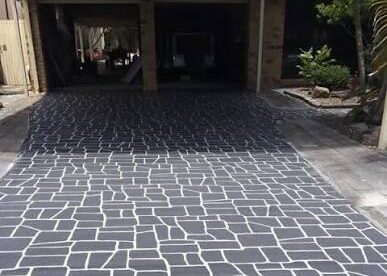
decorative concrete in pakenham


Decorative Concrete

Coloured, honed and pattern finishes. If any part of the decorative work extends into the road reserve, Council approval is required and the minimum concrete strength rises to 32 MPa — see the crossings page below.
 

Vehicle Crossings

The section between your boundary and the kerb. This is the part of the job with a permit, an insurance requirement and a Council standard drawing attached to it.

Recent Concrete Projects Around Pakenham
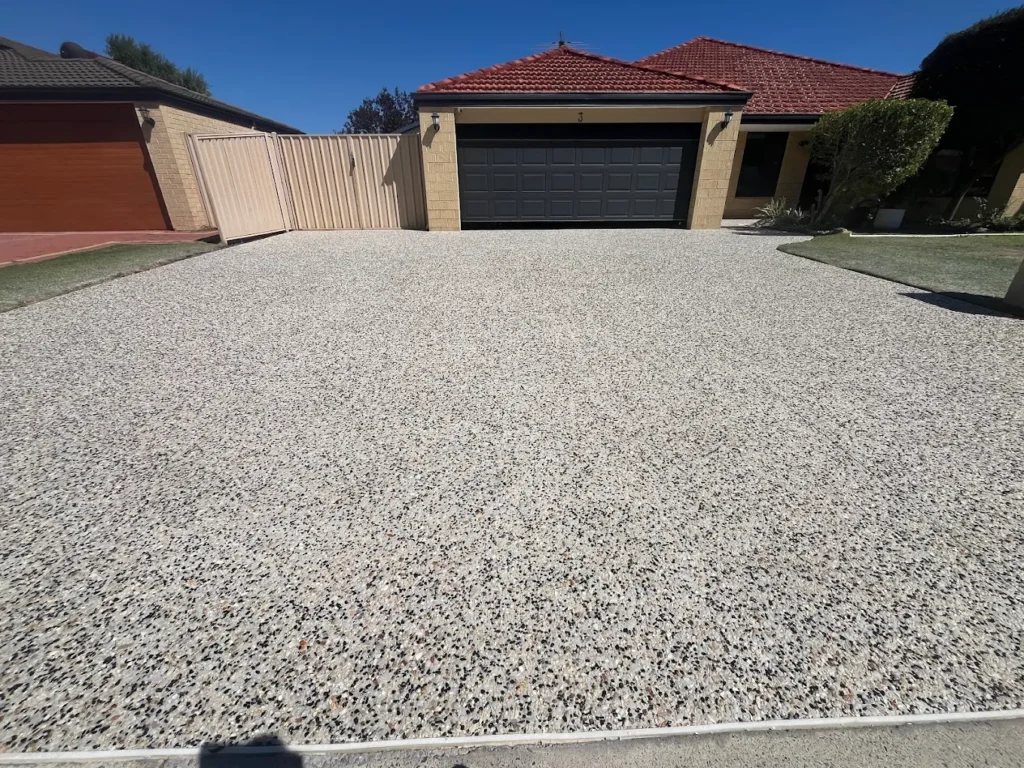
concrete driveway job completed in cranbourne
Concrete entrance job completed in pakenham
exposed aggregate concrete job completed in narre warren north

Why you cannot pour your own crossover

This surprises most people, so it’s worth being plain about it.


To build, alter or add a vehicle crossover in Cardinia Shire, someone has to hold a Works Within a Road Reserve consent. To get that consent, the applicant must supply a Certificate of Currency for Public Liability Insurance showing $20 million — Council’s form states it must be shown as $20 million for all works. Council also states plainly that home insurance does not cover this kind of work.


That single requirement is why a qualified contractor has to do the works. It isn’t a Council preference or an upsell. It’s the threshold that decides who is legally allowed to touch the road reserve at all, and no homeowner’s policy meets it.

It also explains something that catches people out. The contractor or works manager is required to reinstate any affected infrastructure — kerb, channel, footpath, nature strip — to Council standards. If that doesn’t happen, Council reinstates it and bills the contractor. So the insurance isn’t decoration on a form. It’s the mechanism that decides who carries the cost when a kerb gets damaged.

$20 million Public liability cover required before anyone can legally touch the road reserve. No home insurance policy comes close.

What Cardinia actually charges

The consent fee on Cardinia’s current form is $156.30, payable when you lodge. It’s worth understanding where that number comes from: it isn’t a price Cardinia invented. It’s a statutory fee set in fee units under the Road Management (Works and Infrastructure) Regulations 2015, which is why it lands on an odd figure and why it moves every July when fee units are indexed.

You’ll see other Pakenham concreting sites quoting $260, or $200 to $350, sometimes with a refundable bond attached. Check the form yourself before you believe any of them.

Other things worth knowing up front: the permit can take up to 28 business days to process, it’s valid for six months, and it can be extended once by a maximum of three months. The property owner pays all costs associated with crossover works. The same consent also covers connections into Council drainage on private property, including modifications to a Council stormwater pit.

$156.30 Cardinia's consent fee. Set by the state in fee units, not by the council — which is why other Pakenham sites quoting $260 or $350 are wrong.

We prepare and lodge the road reserve consent, with the insurance certificate and sketch plan, as part of the job. You don’t touch the paperwork.

Get a free quote

The council you're in changes the job

Pakenham and Officer are Cardinia Shire. Berwick, Narre Warren, Cranbourne and Clyde are City of Casey. Beaconsfield is split between the two. The rules are not the same, and the gap is bigger than most people expect.

  Cardinia Shire City of Casey
Crossover permit fee $156.30 (statutory) $364 (non-refundable)
Permit validity 6 months, +3 months once 12 months
Pre-pour inspection Not specified Mandatory hold point
Drawings supplied by Council No — refers to EDCM standard drawings Yes, issued with the permit

Casey’s process is the one that bites. Once your permit is issued you box up the crossover and you do not pour. You book a pre-pour inspection with three business days’ notice. If it’s declined, you fix it and book again. If the second inspection still doesn’t match the supplied plans, the permit is cancelled and you reapply — and the $364 is non-refundable.

A concreter who treats a Berwick crossover like a Pakenham one will cost you a permit.

The standard your crossover is actually built to

Cardinia publishes no vehicle crossing drawing of its own. It directs contractors to the Growth Area Authority’s standard drawings, so out here the residential crossing is EDCM 501 (single) or EDCM 502 (double).
EDCM 501 — residential vehicle crossing
Concrete
125 mm, N25
Reinforcement
SL72 mesh, 50 mm top cover
Base
50 mm class 3, compacted
Minimum width
3,500 mm
Grade
1:50 to 1:10
Finish
Light broom, AS 4586
If a quote says SL82, ask why. SL82 is EDCM 503 — the heavy duty crossing, 4000 mm wide. It isn’t the residential drawing, and specifying it doesn’t make your driveway better, it makes the quote look technical. The clearances in the same drawing set are what most often move a crossover from where you wanted it: 7 m between non-abutting crossovers measured at the kerb, 6 m from an intersection tangent point and clear of splitter islands, 2 m from a pram crossing, 1 m from fire hydrants, streetlights, service pits and your legal point of discharge, and 0.75 m from a drainage pit — inside that, a Class D pit lid goes in. Street trees are their own conversation. We check these before quoting, not after boxing up.

We build to your site classification, not to your suburb

You’ll read a lot of confident writing about the soil out here. Be careful with it.


Under AS 2870, a site classification is a laboratory result from your lot. It’s derived from shrink-swell testing on samples from a real geotechnical investigation, and it’s sensitive — a small change in the measured index can push a site up a class, and the earthworks done on the block can change the answer again. The Pakenham corridor isn’t one uniform sheet of anything: the geology through here runs basalt valley flows separated by ridges of older basement, under a veneer of sand and clay, with alluvium along the creeks.

Which means nobody can tell you your site class from a suburb name, and any quote that reinforces to “the Pakenham soil class” is guessing at your footing design.

So we ask for your soil report. If you’ve built recently you already have one — it came with your slab documentation. Send it with your enquiry and the reinforcement, base depth and jointing in your quote will be designed against the actual number instead of a marketing average. If you don’t have one, we’ll tell you.

Send your soil report with your enquiry and your quote comes back designed against the actual classification — reinforcement, base depth and jointing to the number on the page, not to an average.

Send my soil report

How we work

1. Site check before the quote

We measure, look at your levels and fall, find your legal point of discharge, and check the clearances above against where you want the crossover. We ask for your soil report and, if your estate has design guidelines or a covenant on title, we ask for that too — the finish permitted at your address is set by your estate’s documents, not by a general rule about the area.

2. A written quote that separates the two jobs

Your slab and your crossover are priced as separate lines, with the Council fee shown as a Council fee rather than buried in the rate. You’ll see the specification we’re building to, in writing.

3. Permit lodged, then boxed, then poured

We prepare and lodge the road reserve consent with the insurance certificate and sketch plan. We box up. In Casey we do not pour until the pre-pour inspection passes. In Cardinia we build to the EDCM drawing and reinstate affected infrastructure to Council standard, because the alternative is Council doing it and sending us the bill.

4. Joints, cure, and what we tell you afterwards

Control joints are cut to depth on time, not whenever we get back. Expansion joints isolate the slab from the kerb, path and any fixed structure. We tell you the cure time before you drive on it and we don’t shorten it because you asked nicely.

What to ask before you sign a quote

You’ll get three quotes. They won’t be comparable, and the cheapest one is usually cheap because something’s missing from it. Ask all three of us the same five questions.

  1. Which council am I in, and what does its crossover permit cost right now? If the answer is a guess, so is the quote. Cardinia and Casey are more than double apart and neither figure is a round number.
  2. Can you show me your certificate of currency for $20 million public liability? Not “we’re insured.” The certificate, showing the figure. Without it the crossover cannot legally be built, no matter what the price says.
  3. What specification are you building the crossover to? A concreter who works out here answers this without looking it up.
  4. Have you checked the clearances against where I want it? Drainage pits, hydrants, street trees, the neighbour’s crossover. These get checked before quoting or they get discovered after boxing up.
  5. Have you read my soil report? If nobody has asked for it, nobody has designed your reinforcement.

Ask us the five first, if you like. We'd rather answer them now than after you've paid someone else to guess.

Get a quote

Where we work

Pakenham and Officer sit in Cardinia Shire. If you’re after a concreter in Officer, the council issuing your permit is at 20 Siding Avenue — in your suburb.

If you’re in Beaconsfield, read the concreter in Beaconsfield page before you get quotes. Cardinia Creek runs through the town and forms the municipal boundary, so which side of the creek you’re on decides whether your crossover is a $156.30 Cardinia consent or a $364 Casey permit with a mandatory pre-pour inspection. Same suburb, same postcode, different rules.

In Casey, our concreter in Berwick page covers the street tree and significant landscape controls that decide more Berwick crossovers than the concrete does.

Get a quote

Send your address, what you want poured, and your soil report if you have one. We’ll tell you which council you’re in, what the crossover will actually require, and what we’d build.

Get a quote

FAQ

Do I need a permit for a driveway crossover in Pakenham?

Yes. Cardinia Shire requires a Works Within a Road Reserve consent to construct a new crossover, alter an existing one, or add an additional one. The crossover sits on Council land, so it's governed by the road reserve rules rather than by your title.

How much is a crossover permit in Cardinia Shire?

$156.30, payable on lodgement.

That isn't a fee Cardinia set. It's a statutory charge in fee units under the Road Management (Works and Infrastructure) Regulations 2015, which is why it lands on an odd figure and why it moves every July when fee units are indexed. Other Pakenham concreting sites quote $260, or $200 to $350, sometimes with a bond attached. Check Council's form yourself.

Can I build my own crossover?

No. To get the consent, the applicant must supply a Certificate of Currency for Public Liability Insurance showing $20 million. Council's form states it must be shown as $20 million for all works, and Council states plainly that home insurance is not Public Liability Insurance and does not cover these works.

No homeowner's policy meets that threshold, so a qualified contractor has to do the works.

Why does the City of Casey charge more than Cardinia?

Because they're charging for different things. Cardinia issues the statutory road reserve consent at $156.30. Casey runs a separate, council-set vehicle crossing permit at $364, non-refundable, alongside the same statutory framework.

The extra buys Council-issued drawings, twice the permit validity, and a mandatory pre-pour inspection. Whether that's worth $208 depends on your view of inspection as quality control.

How long does a Cardinia crossover permit take?

Up to 28 business days to process. Once issued, the consent is valid for six months and can be extended once, by a maximum of three months.

What thickness does a residential crossover have to be?

Cardinia publishes no crossing drawing of its own and directs contractors to the Growth Area Authority's standard drawings. The residential crossing — EDCM 501 single, EDCM 502 double — calls for 125 mm of N25 concrete with SL72 mesh at 50 mm top cover, over 50 mm of compacted class 3 crushed rock, minimum 3,500 mm wide.

If a quote specifies SL82, that's EDCM 503 — the heavy duty drawing, 4,000 mm wide. It isn't the residential spec.

How close can my crossover be to a street tree?

The clearance is the tree protection zone, or 3 metres, whichever is greater. Where a crossing falls inside that zone, Council weighs the encroachment against the tree's retention value and can impose conditions on the construction method. Where removal is approved, the applicant pays for the removal and the replacement.

Street trees move more crossovers than any other clearance on the drawing.

What soil class is Pakenham?

There isn't one. Under AS 2870, a site classification is a laboratory result from your lot — derived from shrink-swell testing on samples from a real geotechnical investigation, sensitive enough that a small change in the measured index moves the site up a class, and changeable again by the earthworks done on the block.

The corridor isn't uniform either: the geology runs basalt valley flows separated by ridges of older basement, under a veneer of sand and clay, with alluvium along the creeks.

So any quote that reinforces to "the Pakenham soil class" is guessing at your footing design. Send us your soil report and we'll design against the actual number.